Here Are Some of our most
Frequently Asked Questions
We hope this helps you feel confident, informed, and ready to get the most out of your mushrooms.
Extracts*
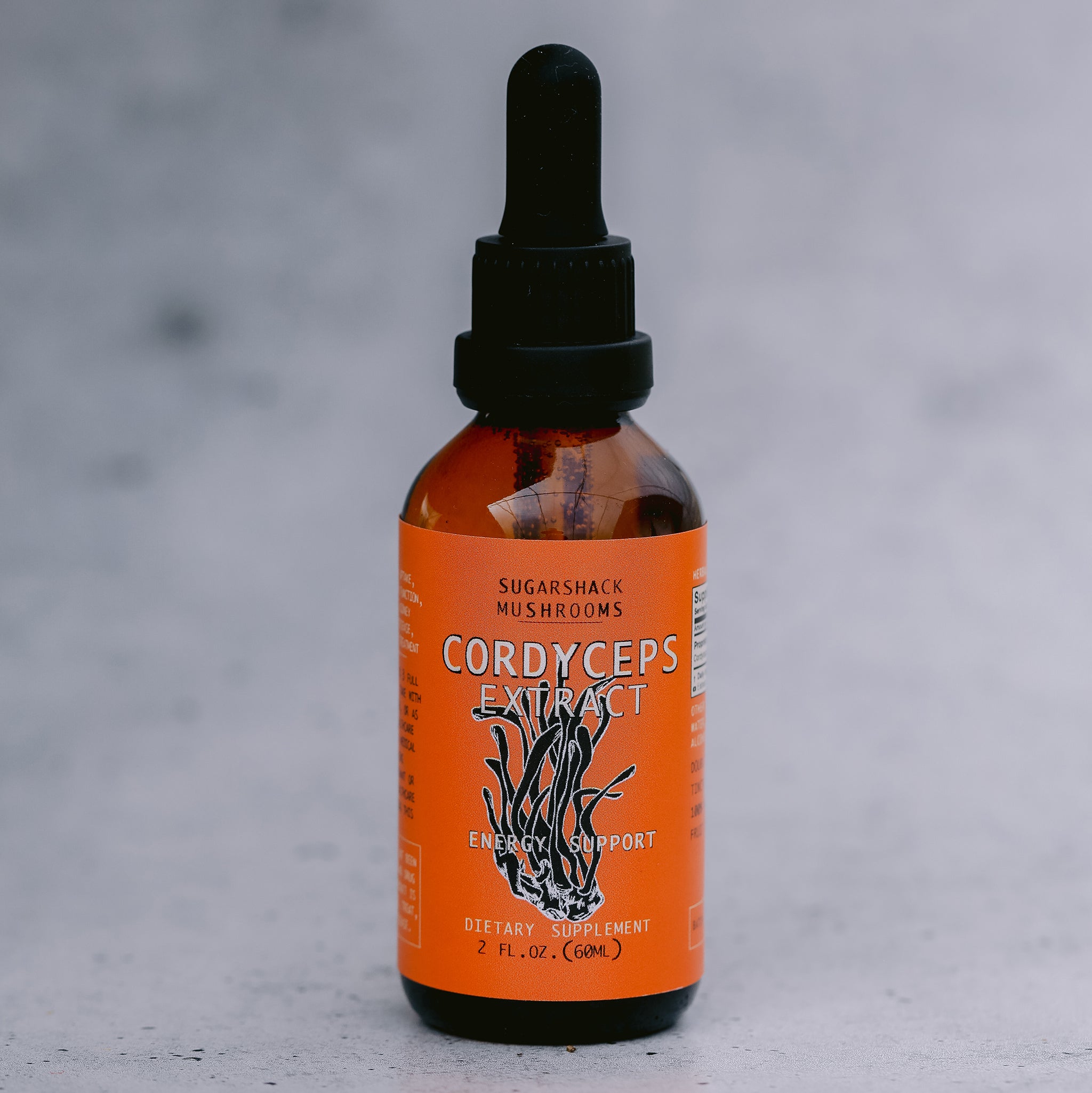
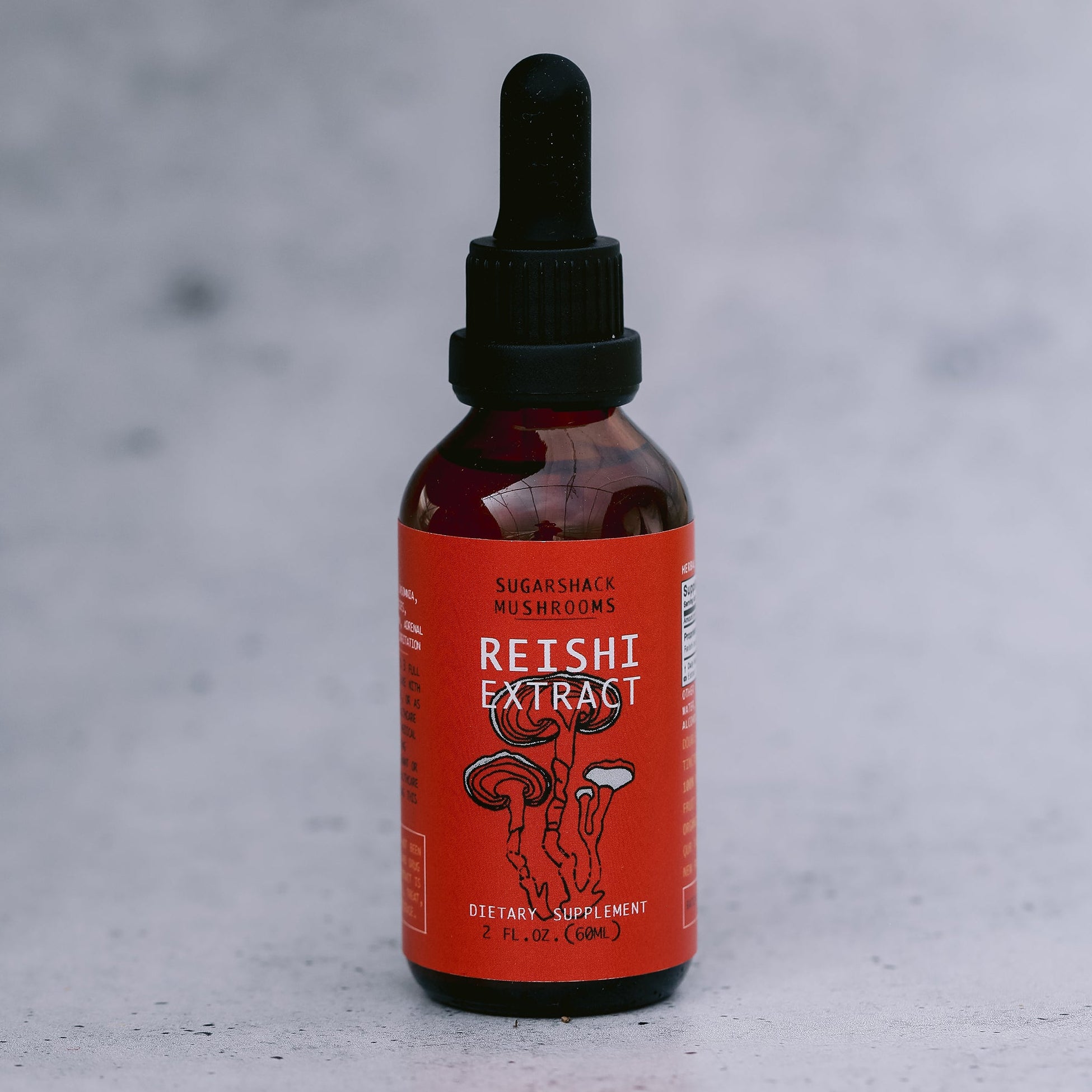
What is a tincture?
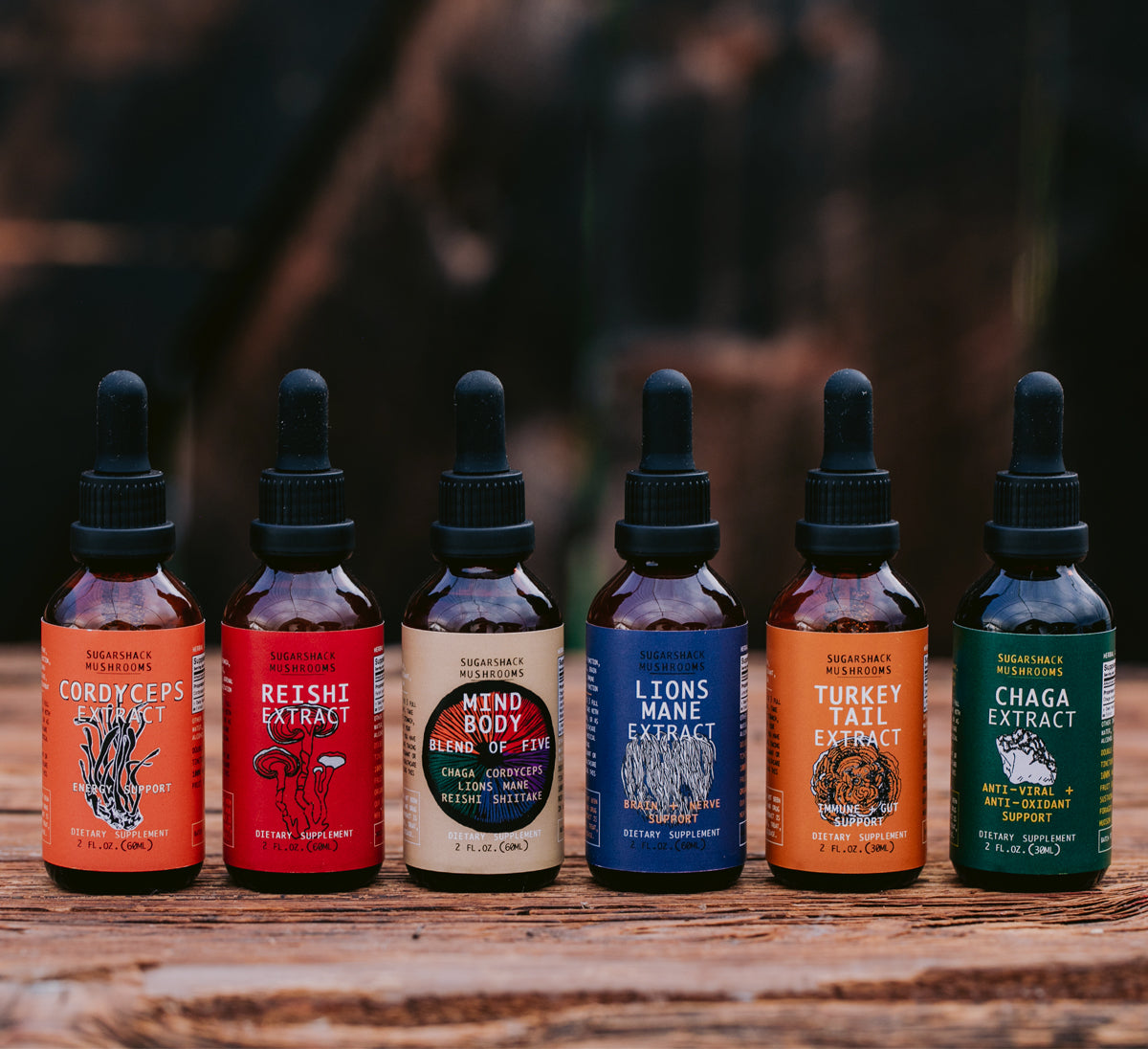
A tincture is a concentrated liquid extract made by soaking mushrooms in alcohol and water to draw out their beneficial compounds.
Is a dual extracted tincture better?*
Yes, a dual extracted tincture is generally better because it uses both alcohol and hot water to capture a wider range of beneficial compounds. Read more.
Why is mushroom tincture good for the body?
Mushroom tinctures help your body absorb beneficial compounds like polysaccharides, beta-glucans, triterpenes, sterols, and antioxidants, which support immune balance, energy, cognitive function, and overall resilience. Read more.
Does Lion’s Mane help with memory?*
Lion’s Mane is studied for its potential to support memory and cognitive function, particularly through compounds that may promote nerve health.
While early research is promising, it is not considered a guaranteed or clinically proven treatment for memory loss in Western medicine. Read more.
Does Turkey Tail cure cancer?*
Turkey Tail is not recognized in the United States as a cure for cancer, and the FDA has not approved Turkey Tail or PSK as a cancer treatment.
What the research does show is more specific: Turkey Tail compounds, especially PSK and PSP, have been studied as adjuncts to chemotherapy and other standard treatments, with evidence from Japan and China suggesting benefits in immune function and, in some settings, survival or recurrence outcomes, but not as a stand-alone cure. Read more.
What are PSK and PSP?*
PSK (polysaccharide-K) and PSP (polysaccharide peptide) are specific protein-bound polysaccharides isolated from Turkey Tail mushrooms that have been studied for their effects on the immune system.
They are among the most researched mushroom compounds, with PSK used as an approved adjunct cancer therapy in Japan and both studied for their ability to help modulate immune response alongside conventional treatment. Read more.
How should I take my tincture?*
Take your tincture by placing a dropperful under your tongue or adding it to a small amount of water, tea, or another beverage. For best results, use it consistently 2-3 times daily, adjusting the amount based on your needs and how your body responds.
*These statement have not been evaluated by the Food and Drug Administration. This product is not intended to diagnose, treat, cure or prevent and disease.
Grow Kits
How should I start my Grow Kit?
As each type of Grow kit is slightly different, it is best to first read the specific instructions provided with your kit. For more information, click here.
Where should I place the kit in my home?
Mushrooms want humidity and oxygen. Place your grow kit somewhere with indirect natural light, steady room temperature, and good airflow, like a kitchen counter or shelf. Avoid close proximity to open windows and heating/cooling sources.
What should I do if my mushrooms are getting dry?
You can make a “humidity tent” by draping another plastic bag over your kit, make sure to poke holes in it so that fresh air can still get in.
How long can I wait before I start growing my mushrooms after I bought my kit?
You can wait 2-3 weeks, we recommend storing your unopened kit in a refrigerator or any cold storage that is above freezing.
Should I take the bag out of the box?
All of our mushroom grow kits except shiitake should stay in the box and bag while growing. Find the recommended instructions for your kit here.
Is there any harm in growing my mushrooms indoors?
No, not at all! Growing mushrooms indoors is safe, their spores will not spread in your home or negatively affect your environment.
How often should I mist or water the kit?
Make sure to spray your mushrooms with water at least once every day while growing your kit. For best results 2-3 times daily. Its almost impossible to over water mushrooms.
I am seeing white fuzz, what is that?
That’s mycelium, not mold! Mycelium is the root structure of mushrooms and your kit may be getting extra fuzzy, that’s a good sign - it means its vigorous and happy.
What if my second flush is not growing?
After harvesting your first flush, continue misting daily and keep the block well hydrated, using a loose humidity cover if it begins to dry out. Expect the next round of mushrooms to take up to a couple of weeks to appear. If no new growth forms, rehydrate the block by soaking it cut side down in water (20 minutes for Oyster or 5 minutes for Lion’s Mane), then let it drain and remove any excess moisture. For Shiitake, fully submerge in water for 2 hours. Return the block to its growing spot and resume misting 2 to 3 times per day until new pins begin to form.
What are these brown droplets?
Sometimes you may see amber colored droplets on the surface of your kit. This is called “mycelial exudate”. Mushrooms digest outside their bodies by releasing enzymes into their environment. These droplets are a sign of your mushrooms healthy digestion!
Fresh mushrooms
Can I eat raw mushrooms?
Eating mushrooms raw is not recommended. Make sure to cook your mushrooms. Heating them thoroughly releases their nutrients, such as protein, B vitamins, and minerals.
How should I cook Lion's Mane mushrooms?
A prime and easy way to cook Lion’s Mane in a dry pan first, over medium heat, so the excess water can release and evaporate before adding oil or butter. Once the mushroom has reduced and the pan is no longer watery, add oil or butter and seasoning, then continue cooking until the pieces are browned and firm. Some people love a little Old Bay!
How should I cook Shiitake mushrooms?
Cook shiitake in a hot pan with a little oil, giving them enough time to release moisture before adding salt or sauce. Some people remove the stems because they can be tough, while others slice them thin and cook them longer. Great other ingredients are salt or soy sauce, fresh herbs, onion, black pepper and a little sugar.
How should I cook Oyster mushrooms?
You can cook Oyster mushrooms in a hot pan with a little oil, spreading them out so they can release moisture before adding salt or sauce. Slice the thicker stem sections thinner so they cook at the same pace as the tender caps, then let the edges brown before stirring too much. Great other ingredients are salt, butter, garlic, fresh herbs and fish sauce.
How should I cook Chestnut mushrooms?
Cook Chestnut mushrooms in a hot pan with a little oil, giving them space so they release moisture before adding salt or sauce. Keep them cooking until the caps and stems are fully tender, slicing larger mushrooms in half or quarters so they cook evenly. Great additional ingredients are garlic, thyme, butter, soy sauce, onions, and fresh herbs.
How should I cook Maitake mushrooms?
Break the Maitake mushrooms into manageable pieces, keeping the thicker sections smaller so everything finishes at about the same time. Cook in a hot pan with oil until the moisture has cooked off and the edges have browned, then season toward the end. Scallion and fresh herbs are excellent additions.