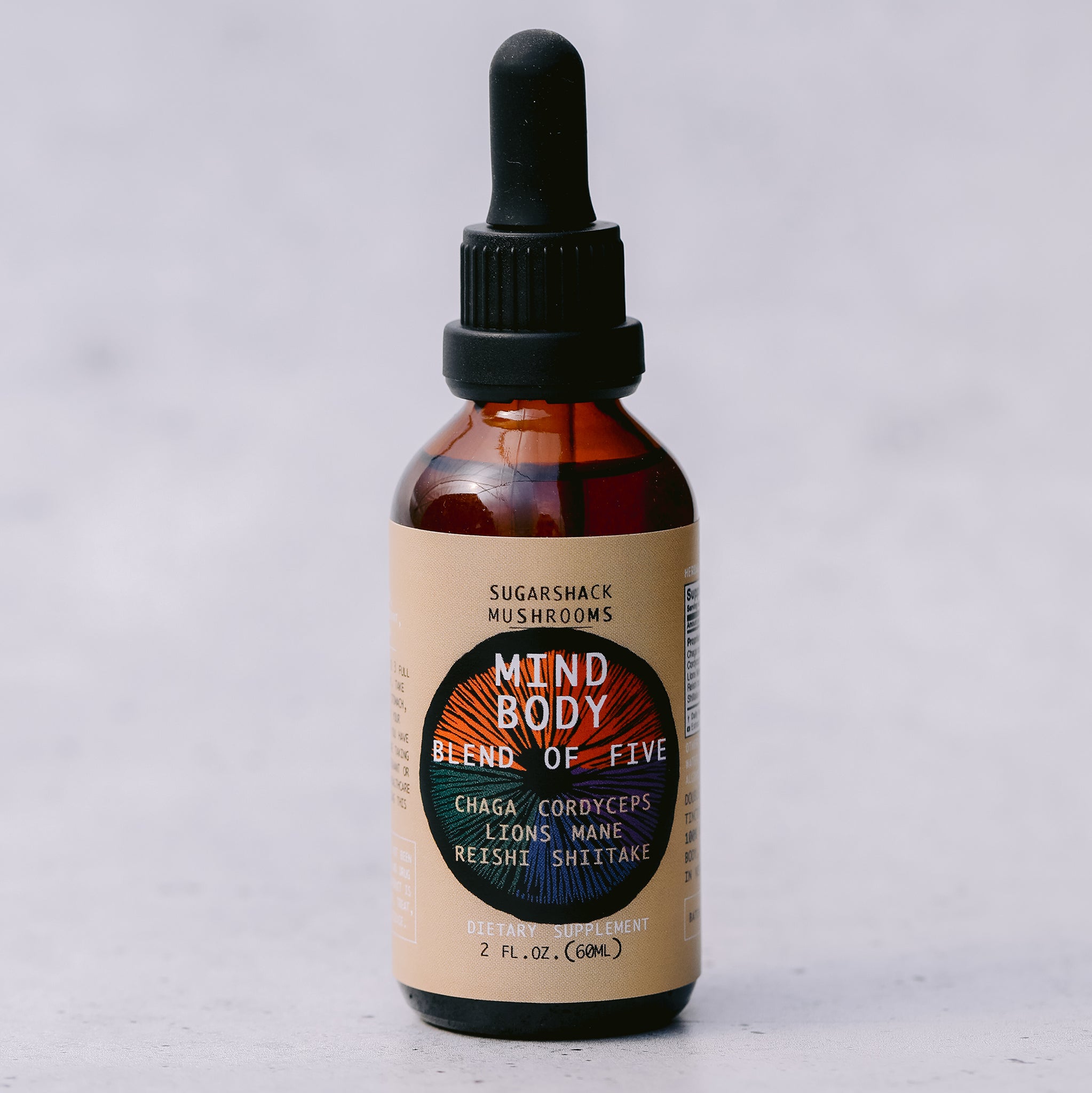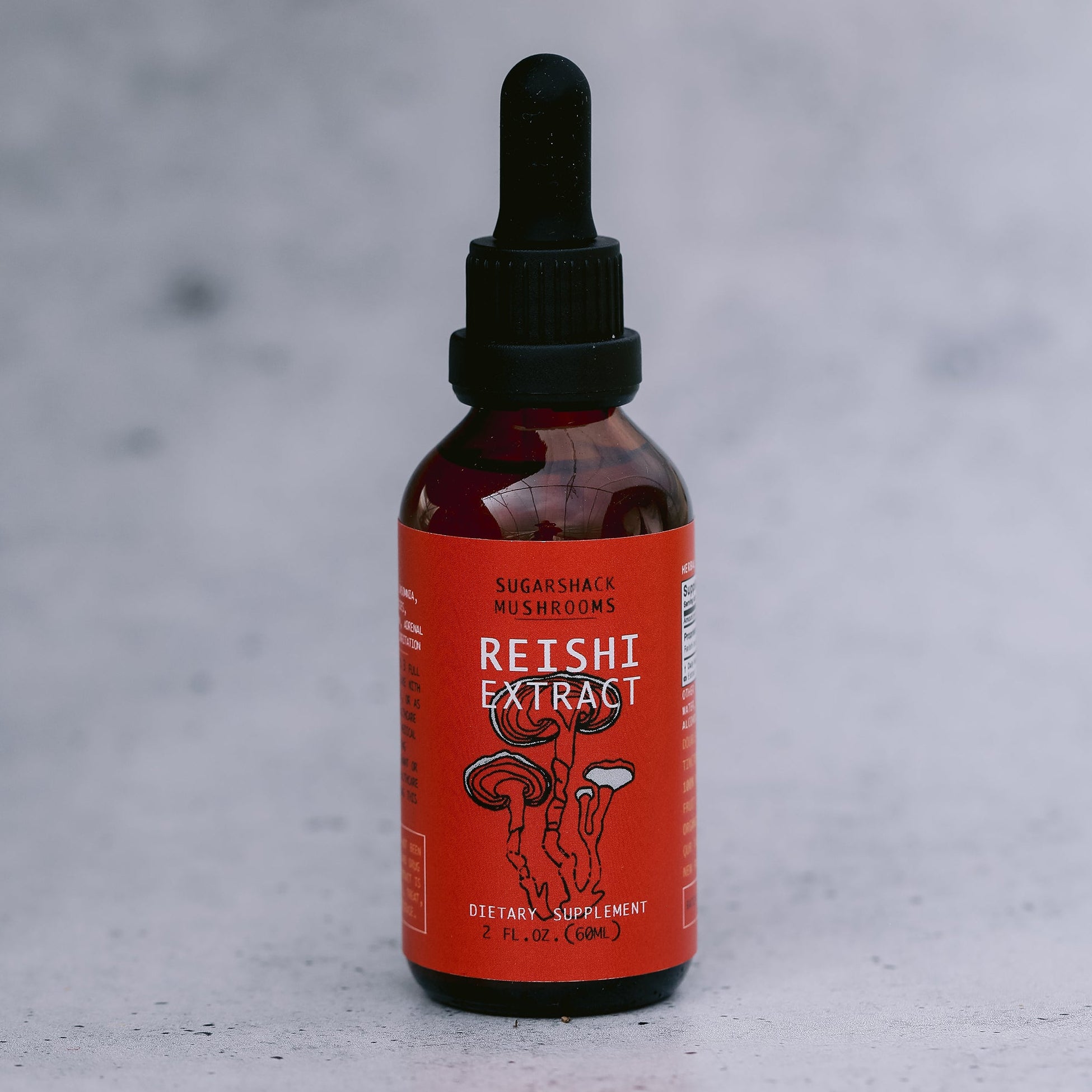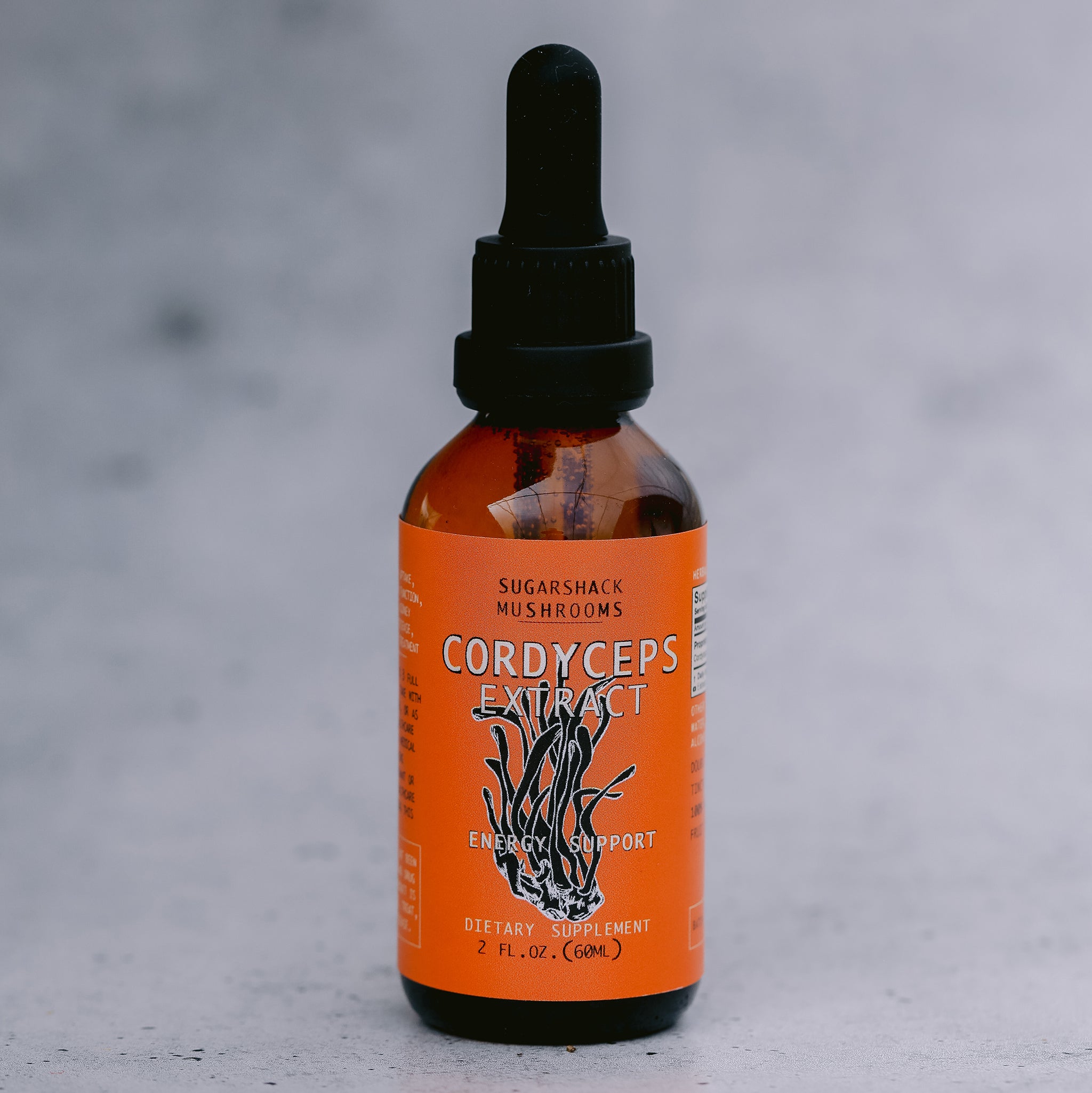
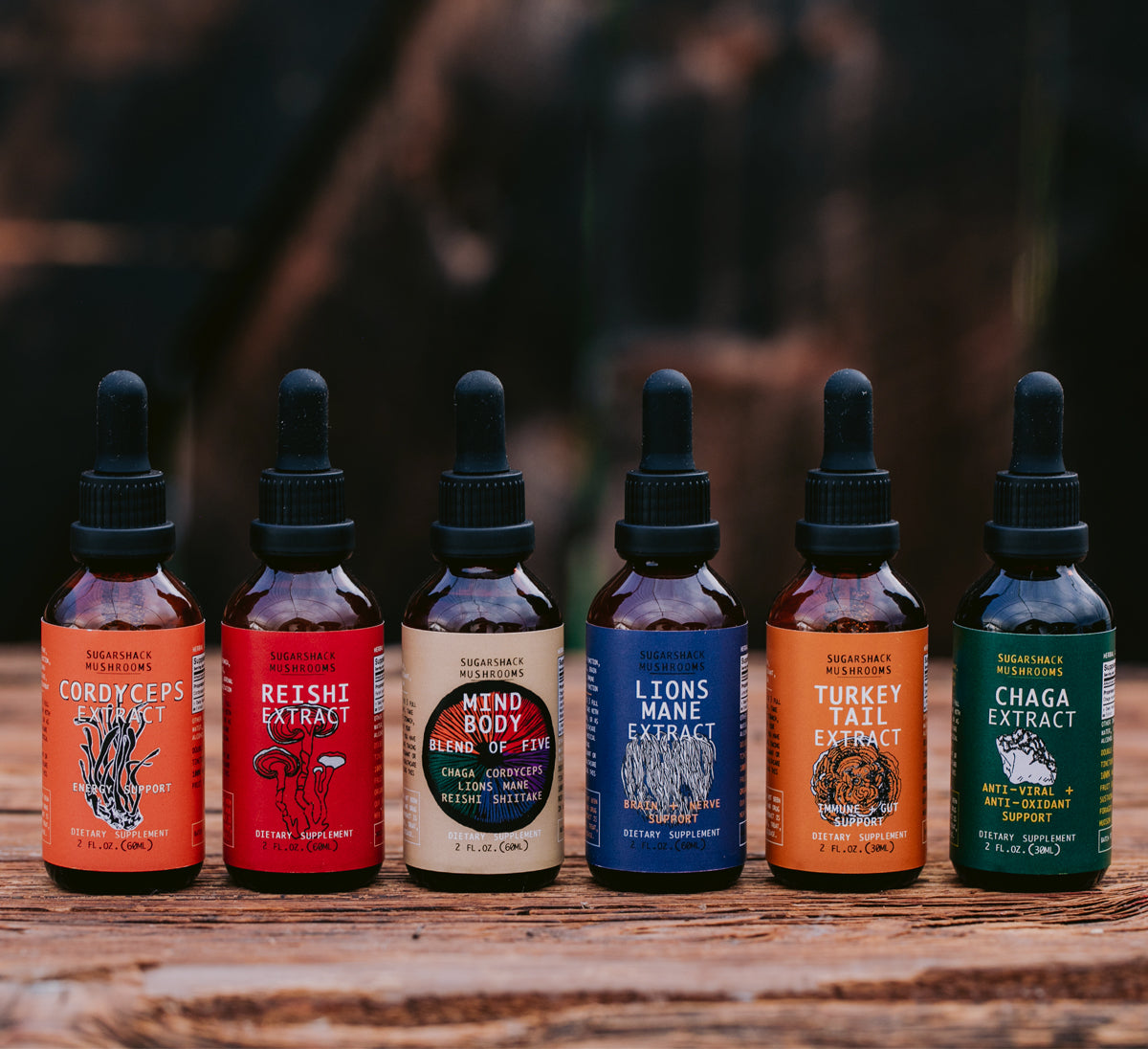
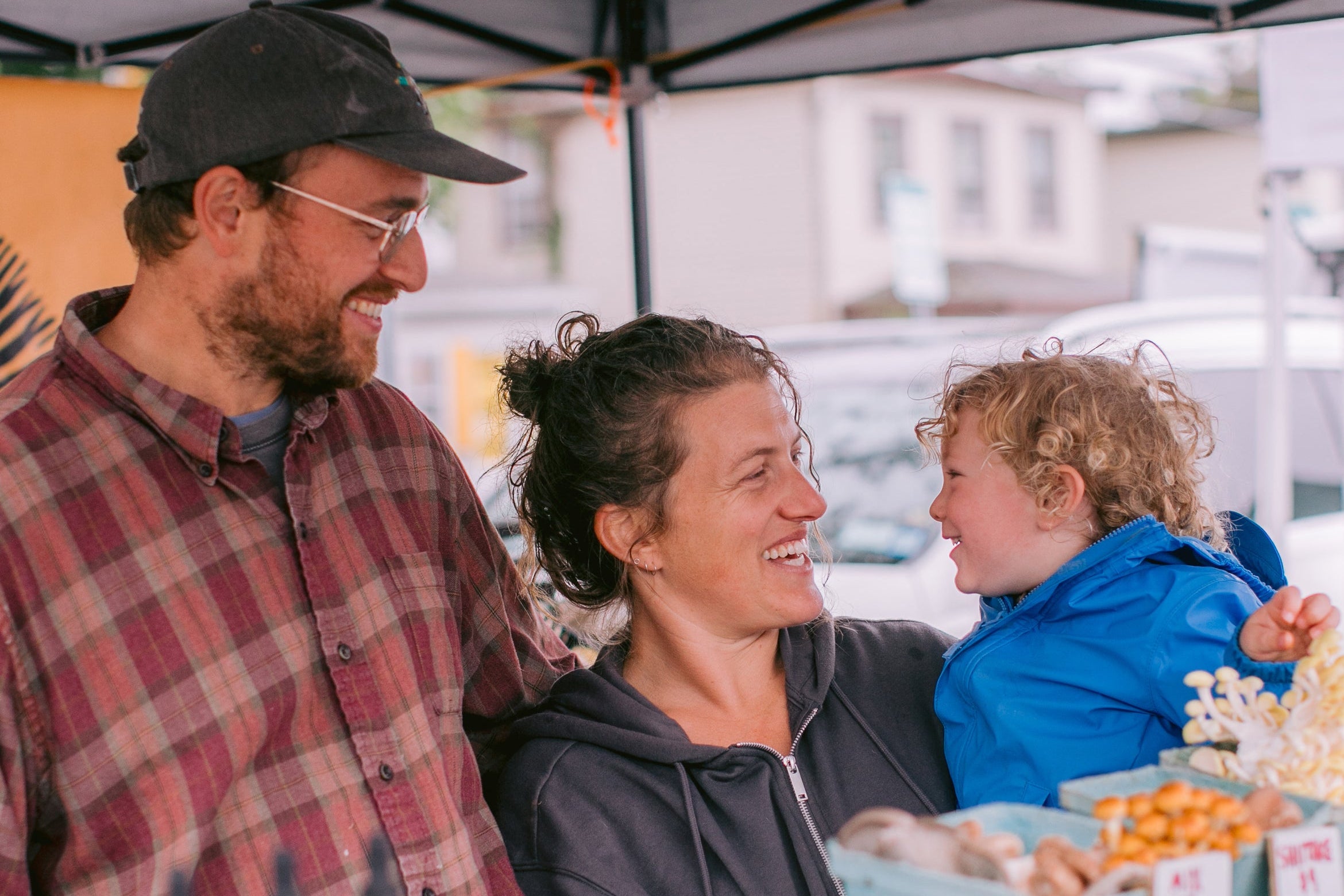
Sugarshack Mushrooms is a family-run organic mushroom farm in New Paltz, New York, in the Hudson Valley. Since 2018, we’ve been growing a wide variety of nutrient-dense gourmet mushrooms, selected for both their culinary qualities and their health benefits. Alongside our fresh produce, we make our own handmade medicinal mushroom tinctures and produce grow-your-own kits, keeping each part of the process in-house.
Sugarshack Mushrooms is a family-run organic mushroom farm in New Paltz, New York, in the Hudson Valley. Since 2018, we’ve been growing a wide variety of nutrient-dense gourmet mushrooms, selected for both their culinary qualities and their health benefits. Alongside our fresh produce, we make our own handmade medicinal mushroom tinctures and produce grow-your-own kits, keeping each part of the process in-house.
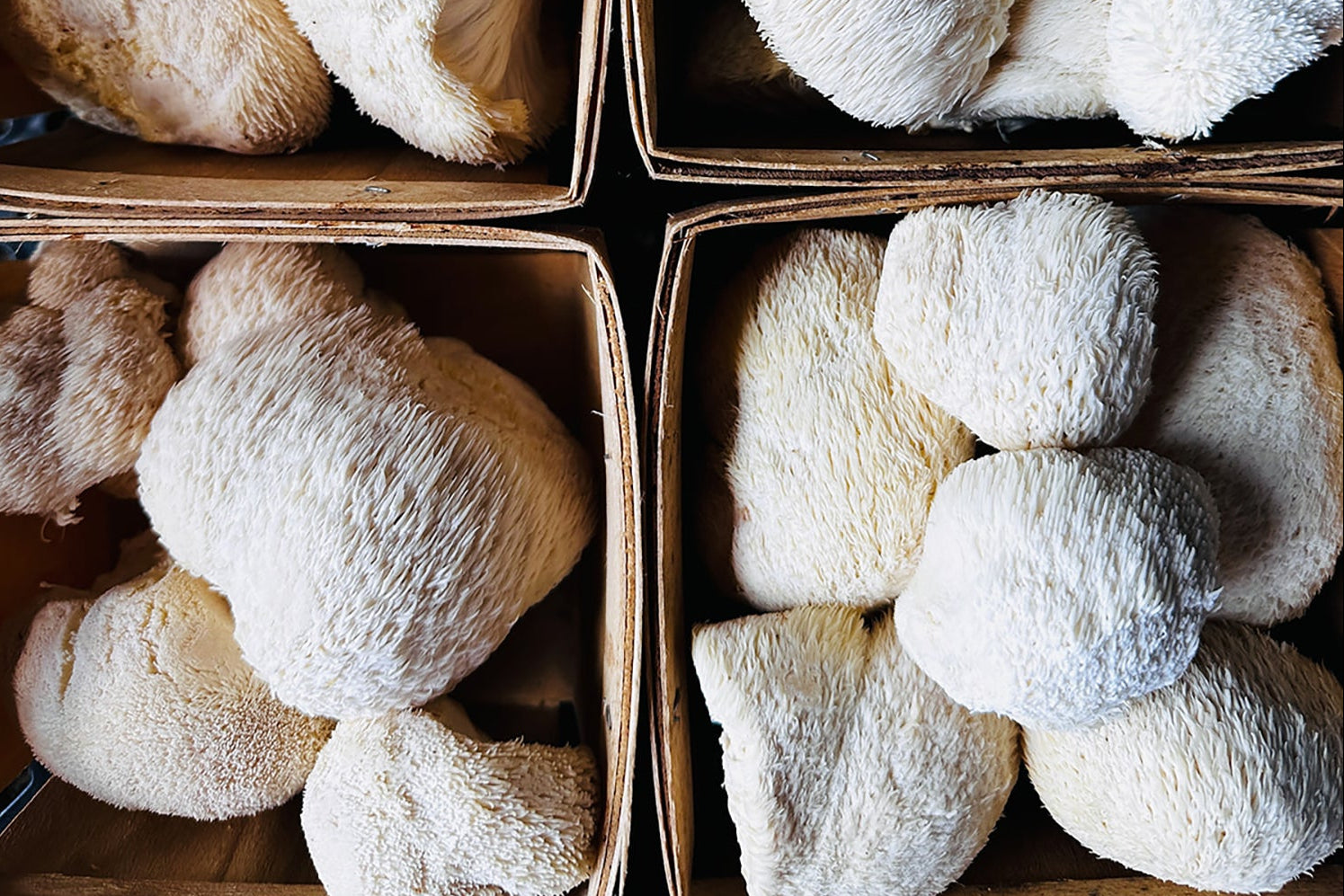
We are committed to farming with a low impact on the land, producing potent and nutrient-dense products, and helping to expand awareness of the enjoyment and benefits that mushrooms offer. While we sell our fresh mushrooms at local farmers markets and restaurants, we also partner with regional CSAs (Community Supported Agriculture), providing a mushroom add-on so members can easily incorporate mushrooms into their weekly vegetable share.
We are committed to farming with a low impact on the land, producing potent and nutrient-dense products, and helping to expand awareness of the enjoyment and benefits that mushrooms offer. While we sell our fresh mushrooms at local farmers markets and restaurants, we also partner with regional CSAs (Community Supported Agriculture), providing a mushroom add-on so members can easily incorporate mushrooms into their weekly vegetable share.
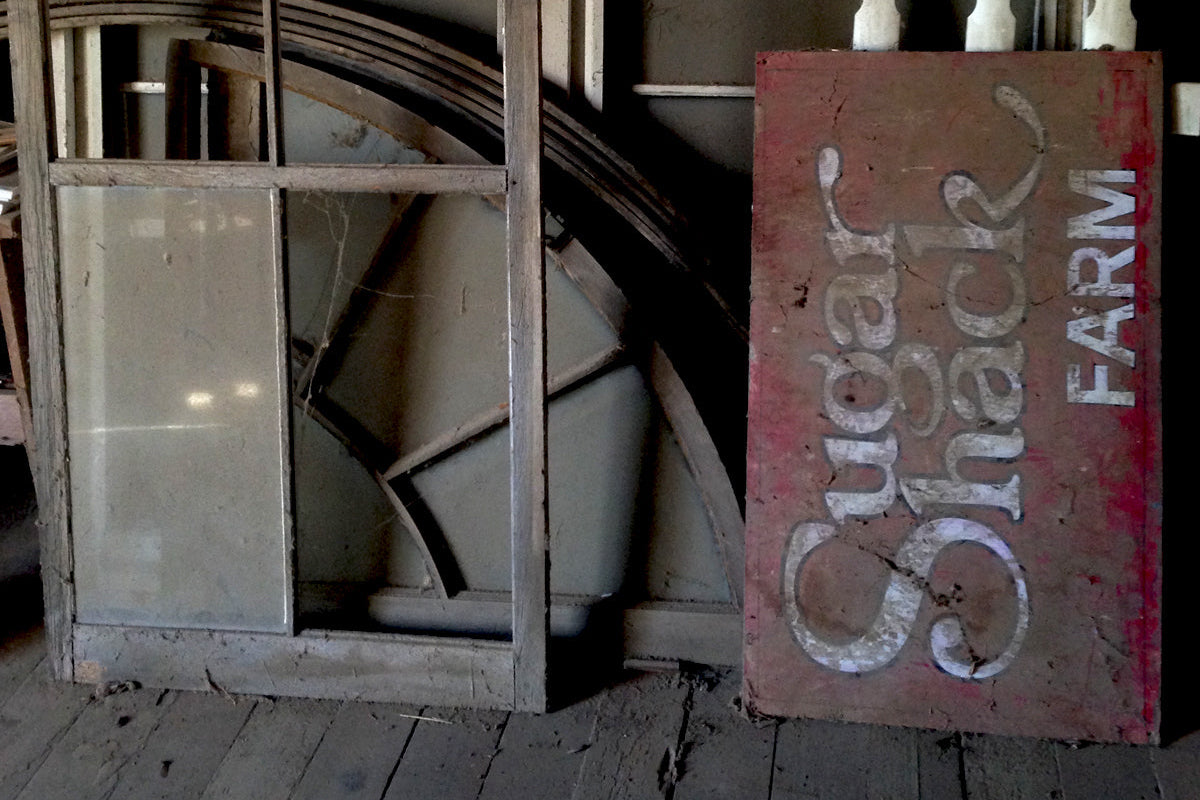
Our name, Sugarshack Mushrooms, comes from the farm's history. The farmhouse, built in the 1970s, was built as an addition off of a small existing building: an old shack used for maple sugar processing. The barn on the property is dated at 1900, but the massive hand-hewn American Chestnut beams and square Dutch post-and-beam framing style indicate it may be significantly older. Repairs in the house have exposed the unmilled log rafters of the old shack (with the bark still on), suggesting a similar construction timeline as the barn. When we started the farm, there was an interesting item left in the barn. It was an old, hand-painted sign that read “Sugar Shack Farm”. Our work on the farm as Sugarshack Mushrooms is an extension of its past.
Our name, Sugarshack Mushrooms, comes from the farm's history. The farmhouse, built in the 1970s, was built as an addition off of a small existing building: an old shack used for maple sugar processing. The barn on the property is dated at 1900, but the massive hand-hewn American Chestnut beams and square Dutch post-and-beam framing style indicate it may be significantly older. Repairs in the house have exposed the unmilled log rafters of the old shack (with the bark still on), suggesting a similar construction timeline as the barn. When we started the farm, there was an interesting item left in the barn. It was an old, hand-painted sign that read “Sugar Shack Farm”. Our work on the farm as Sugarshack Mushrooms is an extension of its past.
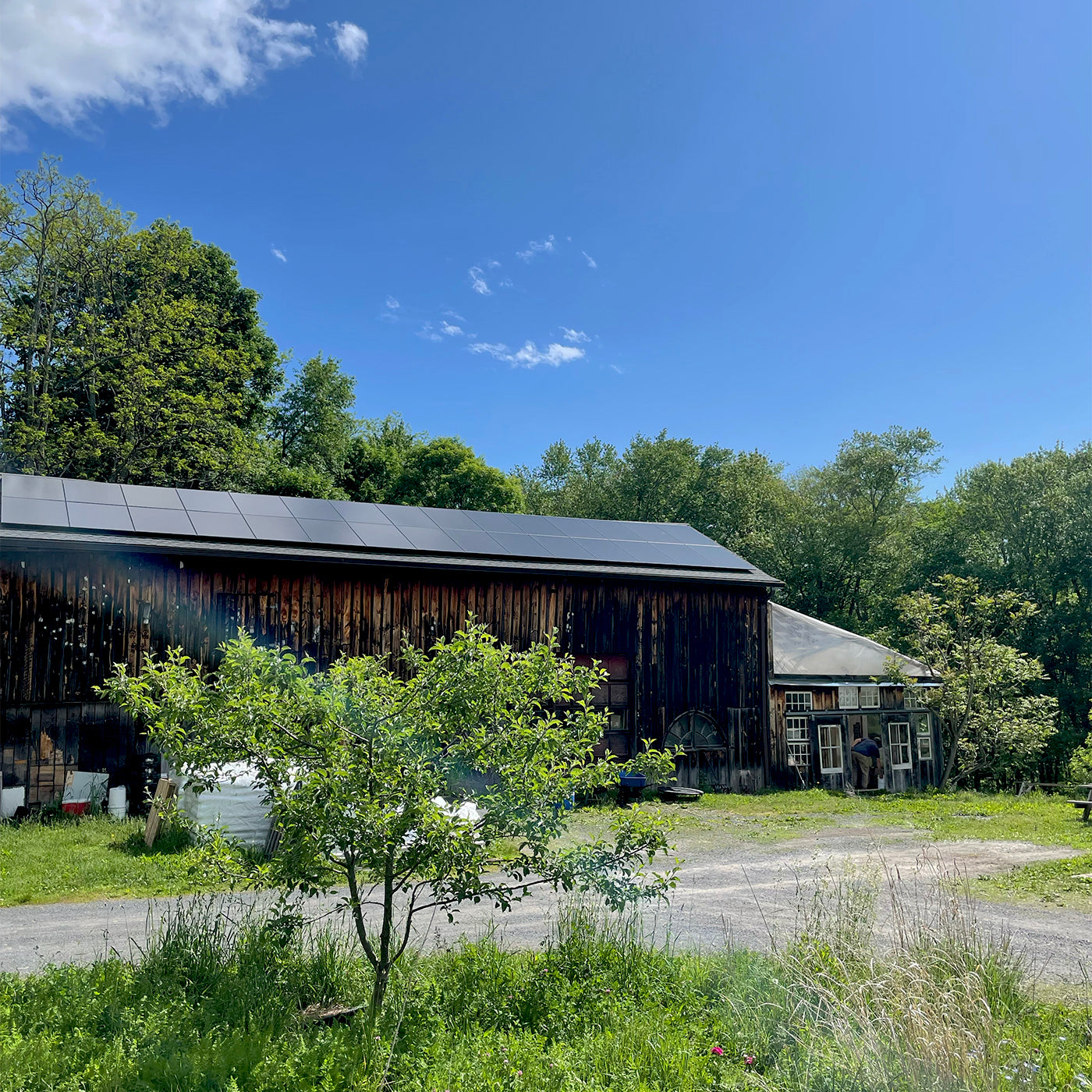
Thanks to a farm sustainability grant from our county (Ulster County Agricultural Farm Grants Program), our farm now operates entirely on solar power. With solar panels now covering the barn and farmhouse, the same sun that drives the forest ecosystems is now what powers our grow rooms, processing, and production. The significant energy consumption necessary for our farming process has always been a costly part of our production – both environmentally and financially. The long term sustainability this provides is hard to overstate. We now are able to count ourselves among the very few fully solar-powered mushroom farms in the United States.
Thanks to a farm sustainability grant from our county (Ulster County Agricultural Farm Grants Program), our farm now operates entirely on solar power. With solar panels now covering the barn and farmhouse, the same sun that drives the forest ecosystems is now what powers our grow rooms, processing, and production. The significant energy consumption necessary for our farming process has always been a costly part of our production – both environmentally and financially. The long term sustainability this provides is hard to overstate. We now are able to count ourselves among the very few fully solar-powered mushroom farms in the United States.
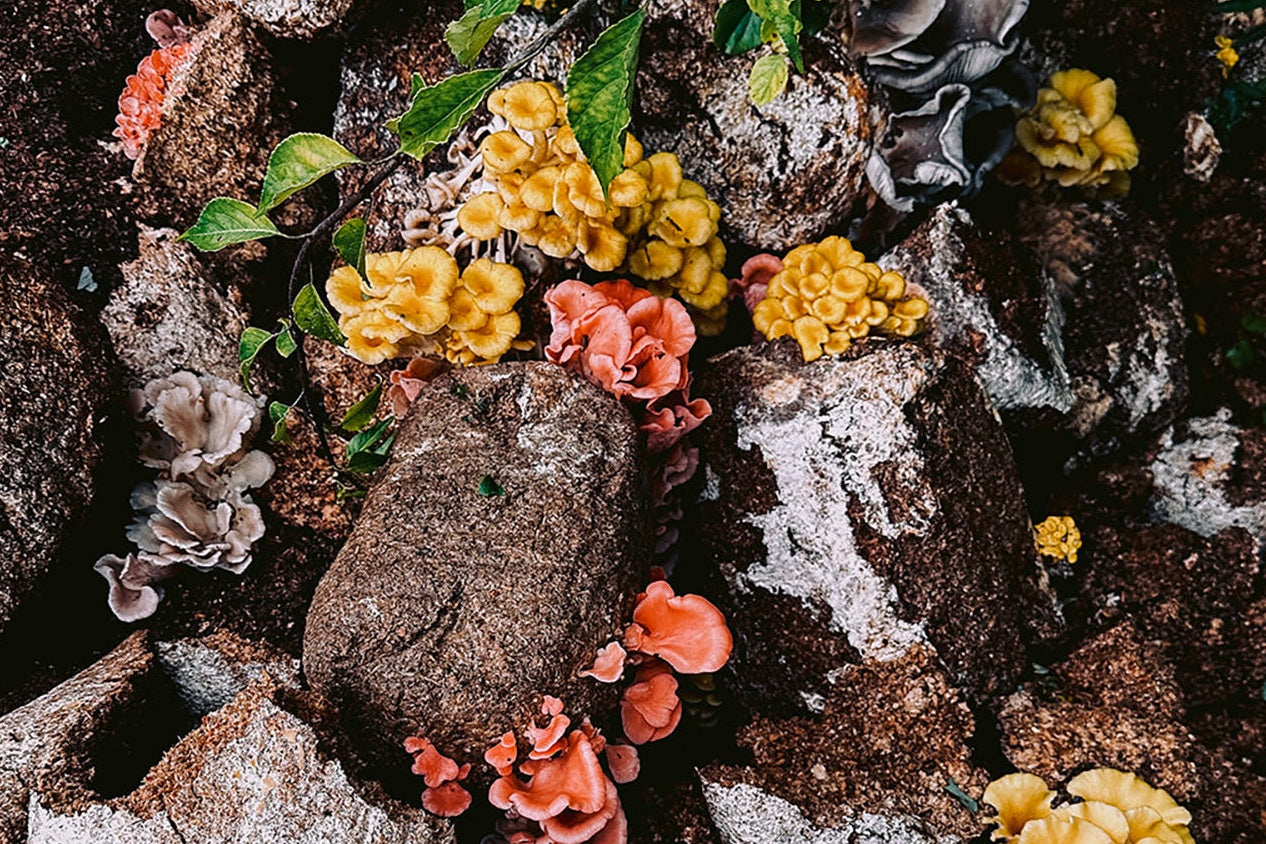
The farm is bordered by wetlands, which have become a natural extension of our growing process. In these consistently humid areas, we’re able to continue harvesting from our spent mushroom blocks, giving them a second life as they fruit outdoors. As these blocks break down, they become a rich, living compost, full of organic matter, fungal life, and nutrients that help build soil structure, retain moisture, and support long-term fertility in the land.
The farm is bordered by wetlands, which have become a natural extension of our growing process. In these consistently humid areas, we’re able to continue harvesting from our spent mushroom blocks, giving them a second life as they fruit outdoors. As these blocks break down, they become a rich, living compost, full of organic matter, fungal life, and nutrients that help build soil structure, retain moisture, and support long-term fertility in the land.
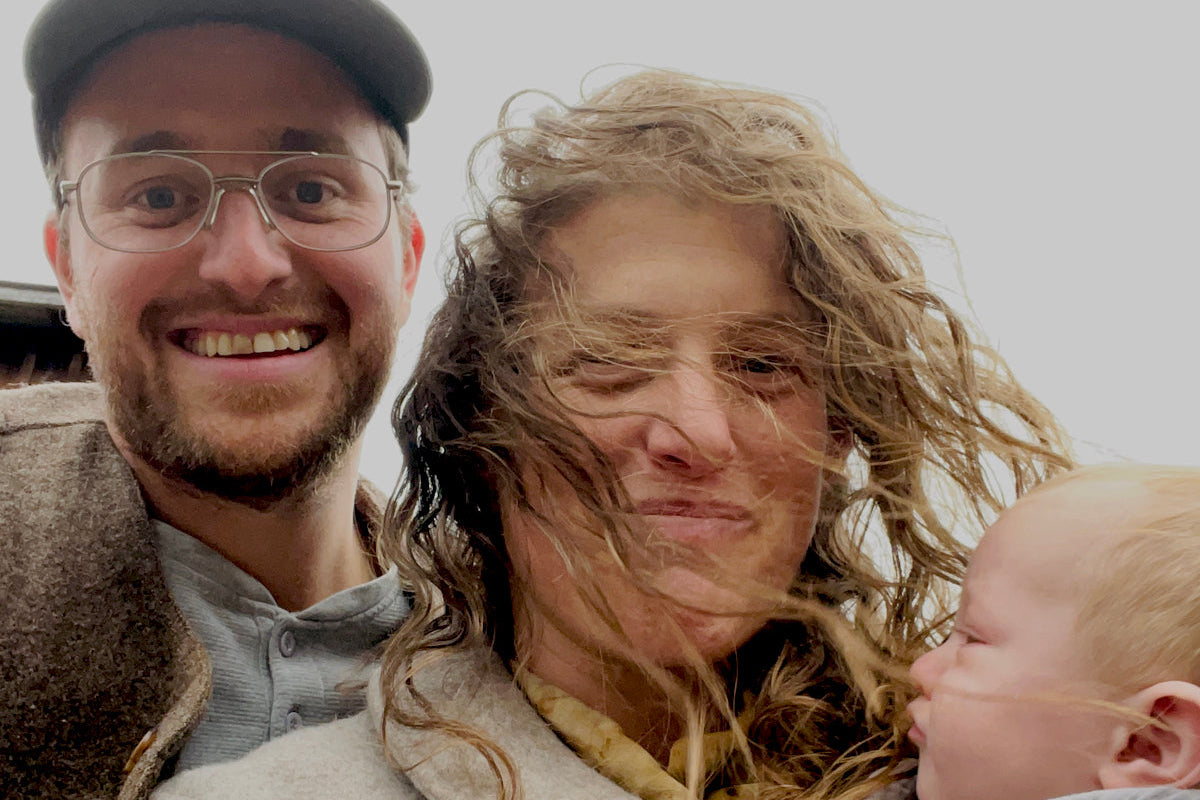
We pour so much of ourselves into making the farm work day to day, and none of this would be possible without the people around us. We rely on our employees, volunteers, friends, and family, whose time, care, and consistent effort make the farm what it is. From the small, regular tasks to the larger seasonal pushes, their support carries this work forward, and we’re deeply grateful for all of it.
-- Alisa and Adam
We pour so much of ourselves into making the farm work day to day, and none of this would be possible without the people around us. We rely on our employees, volunteers, friends, and family, whose time, care, and consistent effort make the farm what it is. From the small, regular tasks to the larger seasonal pushes, their support carries this work forward, and we’re deeply grateful for all of it.
-- Alisa and Adam