Introduction to Turkey Tail and Medicinal Mushrooms
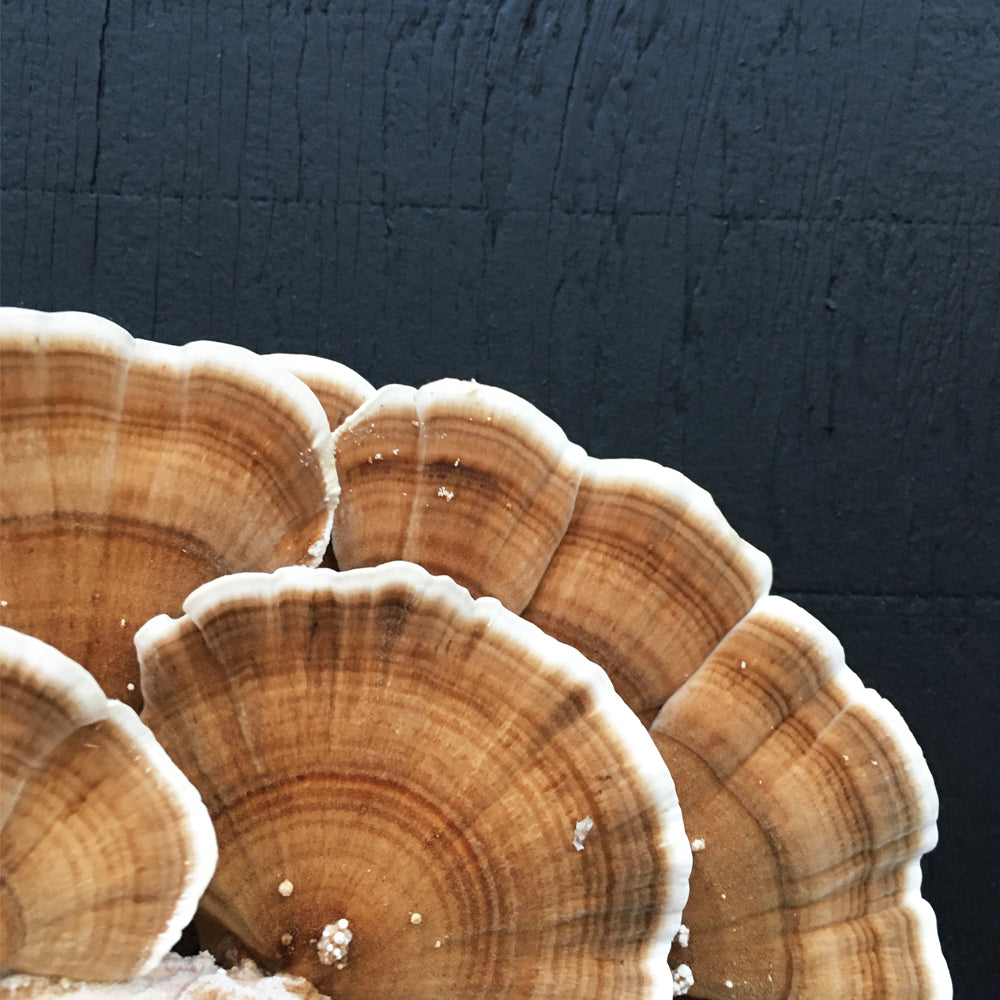
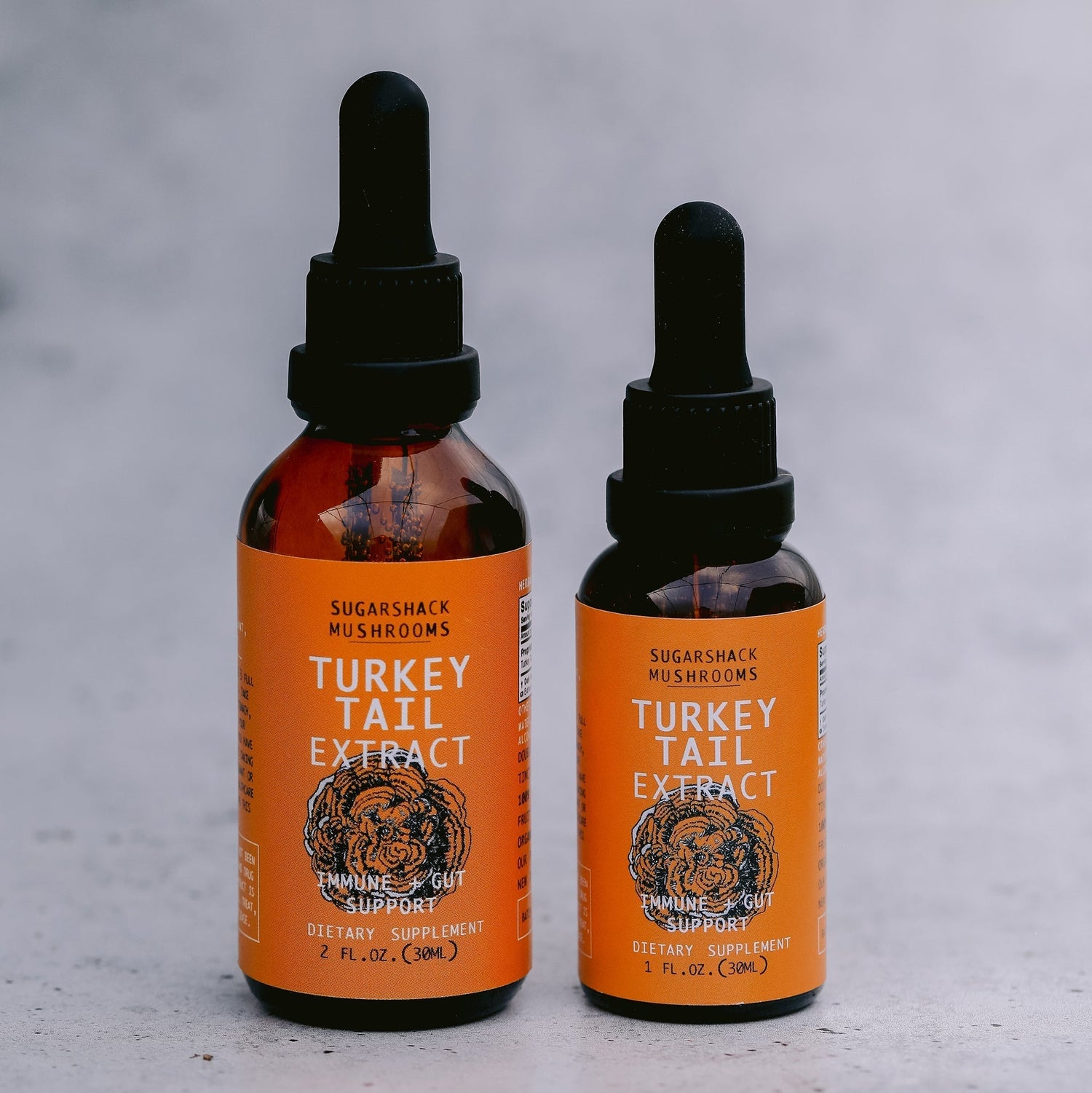
For many people, medicinal mushrooms start as a simple curiosity, something you hear about in passing and slowly begin to explore. One of the most well studied places to begin is Turkey Tail mushroom, a common woodland mushroom that has become central to modern research on immune health.
Turkey Tail has a long history of use in traditional medicine, especially in East Asia, where it was typically prepared as a tea or slow simmered broth. These preparations were taken regularly, often over long periods of time, with the goal of supporting overall health.
The Discovery of PSK and PSP
In the 1960s and 1970s, researchers in Japan and China began studying Turkey Tail more closely. In Japan, scientists working with the pharmaceutical company Kureha Corporation developed polysaccharide-K, known as PSK, from the fruiting body of Turkey Tail. PSK went on to be approved in Japan as a prescription medicine used alongside standard cancer treatments, particularly for gastric and colorectal cancers. Large clinical studies showed that patients receiving PSK in combination with chemotherapy had improved survival rates compared to those receiving treatment alone.
Around the same time, researchers in China isolated a closely related compound called polysaccharide-peptide, or PSP. While PSP followed a slightly different regulatory path, it became the subject of extensive research and showed similar immune-supportive effects.
Understanding Beta-D-Glucans
Together, PSK and PSP are now considered some of the most important examples of beta-D-glucans studied in medicinal mushrooms. The term beta-glucan refers broadly to a group of glucose-based polysaccharides found in fungi, grains, and other organisms, while beta-D-glucan specifies the molecular configuration of the glucose units and is the form present in mushrooms that has been most closely associated with immune activity. When taken regularly, beta-D-glucans interact with immune cells and help the body respond more effectively. Over time, this can lead to a stronger and more coordinated response to health challenges.
Researchers often describe this role as supportive and regulatory because Turkey Tail beta-glucans, including PSK and PSP, interact with immune cells in ways that enhance recognition, signaling, and coordinated defense. Studies show increased activity in macrophages (cells that engulf and break down pathogens and cellular debris), dendritic cells (cells that process and present foreign material to help direct immune responses), and natural killer cells (cells that identify and destroy virus-infected or abnormal cells), along with broader effects across both innate and adaptive immunity. This helps explain why Turkey Tail has been studied as an adjunct in cancer care and for overall immune resilience. More recent beta-glucan research also suggests that repeated exposure can promote a more prepared innate immune response over time, often described as trained immunity. Taken together, the research points toward regular, sustained use as the pattern most consistent with how these compounds have been studied and how their effects appear to develop.
Extraction and Bioavailability
In a whole Turkey Tail mushroom, these compounds are held within a tough cell wall structure that includes chitin, a durable, fibrous polysaccharide that provides rigidity and protection. Simply eating the mushroom raw or in a lightly processed form does not fully release them. Traditional methods addressed this by using long cooking times, allowing heat and water to break down the structure and make these compounds available to the body.
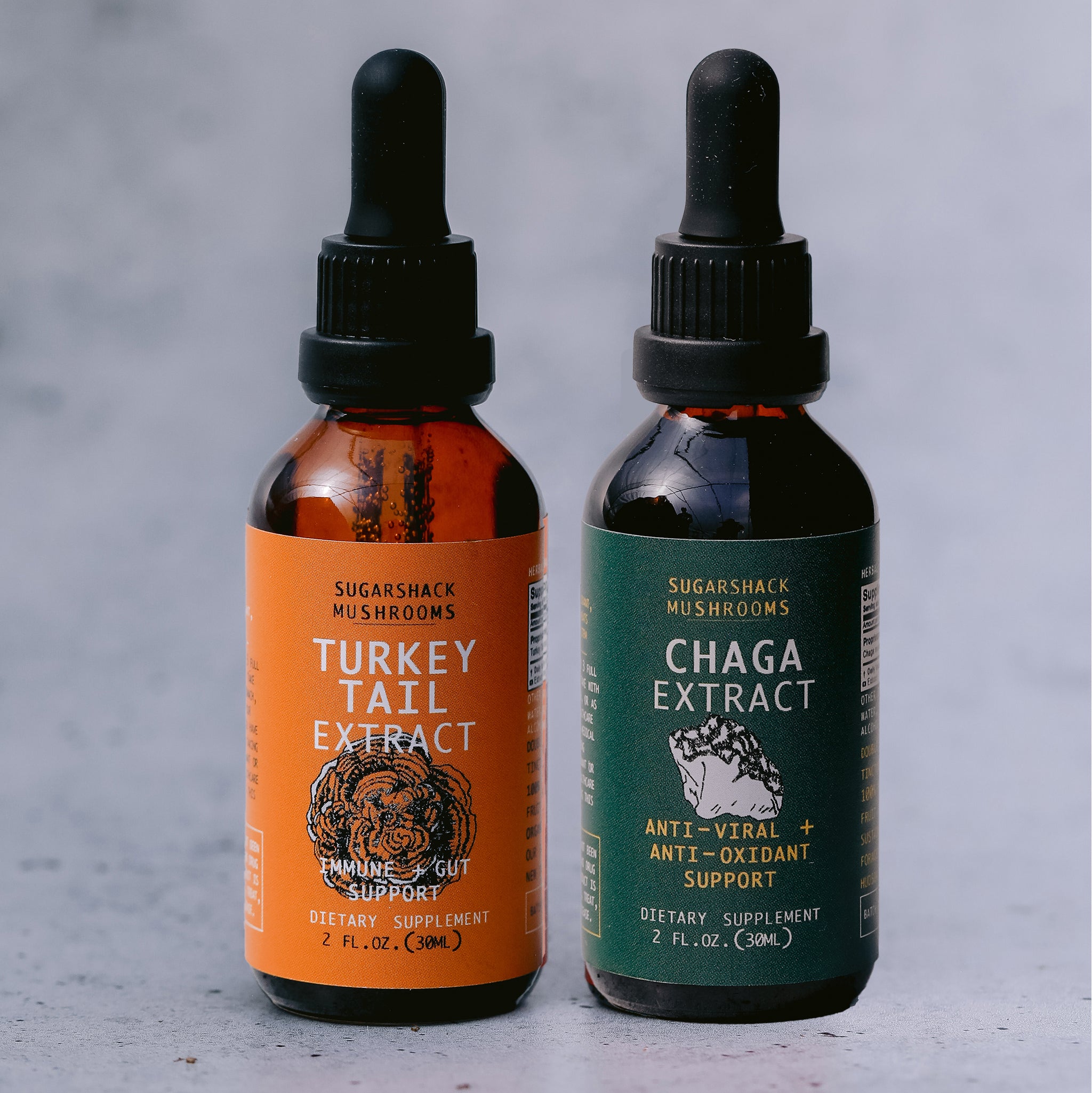
Modern dual extraction builds directly on this approach. It uses both hot water and alcohol to draw out different parts of the mushroom. The hot water portion is especially important for beta-D-glucans. Without that step, much of what makes Turkey Tail valuable remains difficult for the body to access. The alcohol portion pulls out other beneficial compounds, including triterpenes, creating a more complete extract overall.
Understanding this helps explain why different products can vary so much, even when they come from the same mushroom. A well made extract, especially one that uses the fruiting body and a thorough dual extraction process, is much closer to what has been used in research. Other forms, such as simple powders or products made primarily from mycelium grown on grain, may contain different levels or types of these compounds.
Current Research and Future Directions
Today, research on Turkey Tail continues to expand. Beyond cancer-related studies, scientists are exploring its role in gut health, where its compounds may support beneficial bacteria. There is also growing interest in how it supports general immune resilience in everyday life. While there is still more to learn, the overall direction of the research is consistent and increasingly well supported.
The Bigger Picture
By starting with Turkey Tail, it becomes easier to understand a larger idea within medicinal mushrooms. These are not quick fixes or single-purpose substances. They work through support, consistency, and proper preparation. Beta-D-glucans, especially in the form of PSK and PSP, offer a clear example of how something simple in structure can have a meaningful effect when it is properly understood and properly used.
Starting with Turkey Tail mushroom opens the door to a broader understanding of medicinal mushrooms as a whole. Their effects tend to emerge through regular use, careful preparation, and an ongoing relationship with the body. PSK and PSP illustrate how mushrooms can support complex systems like immunity in a meaningful way. As research continues to develop, Turkey Tail offers a clear foundation for understanding where this field is headed and why it continues to gain attention.