A mushroom grow kit is one of the easiest ways to grow fresh gourmet mushrooms at home. Whether you are growing oyster mushrooms, lion’s mane, or shiitake, most grow your own mushroom kits succeed when moisture, airflow, and humidity stay balanced. This guide covers the most common mushroom grow kit problems, how to improve your harvests, and what helps mushroom growing kits produce healthy flushes indoors.
Growing your own mushrooms at home feels simple at first, and in many ways it is. The block is alive, fully colonized, and ready to fruit. Still, the outcome often comes down to a handful of small conditions during the first few days and weeks. Most mushroom grow kit problems are not complicated, though they do tend to repeat. Once you understand what the mycelium is responding to, the process becomes much more reliable.
At Sugarshack Mushrooms, we produce our grow your own mushroom kits in small batches here in the Hudson Valley using wood-based substrates and fully colonized fruiting blocks. Each indoor mushroom growing kit is prepared from the same cultures and growing methods we use in our daily farm production. By the time a kit arrives at your home, the growing process is already well underway.
Dryness Is the Most Common Mushroom Grow Kit Problem
The most common issue with a mushroom growing kit is dryness. Mushrooms are made largely of water, and the surface of the block needs consistent moisture for pins to form and develop properly. When a mushroom grow kit sits near a heating vent, in direct sunlight, or in very dry indoor air, the surface can dry before the mushrooms fully develop.
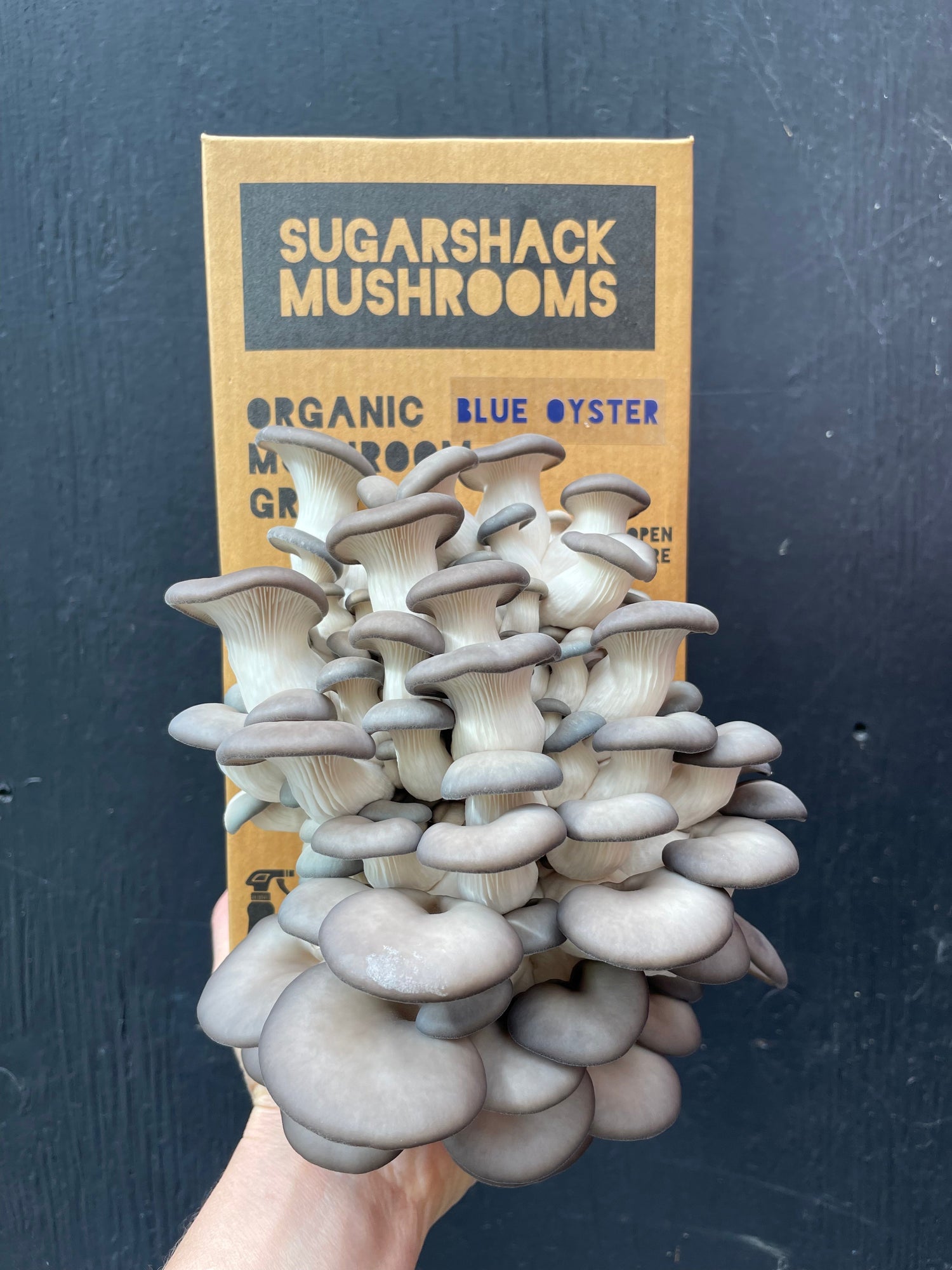
This is especially common with oyster mushroom grow kits because oysters grow quickly and lose moisture fast. Lion’s mane grow kits can also dry out around the fruiting surface, causing slower or uneven development.
The solution is straightforward. Mist the cut area lightly one to two times per day so the surface stays damp without becoming soaked. In dry homes, especially during winter, a loose humidity tent made from a plastic bag can help maintain moisture around the mushroom kit while still allowing airflow.
Too Much Water Can Slow Growth
A mushroom grow kit should never have standing water pooling on the surface. Heavy spraying can lead to soft mushrooms, bacterial issues, or stalled growth. Mushrooms need humidity in the air more than direct water sitting on them.
A fine mist that evaporates gradually creates a healthier environment for indoor mushroom cultivation. If water begins collecting on the surface, reduce spraying and allow the block to dry slightly before resuming your routine.
Fresh Air Shapes Mushroom Growth
Fresh air is one of the most overlooked parts of growing mushrooms at home. Mushrooms take in oxygen and release carbon dioxide throughout their growth cycle. In closed spaces with stale air, mushrooms often develop long stems and small caps.
This is especially noticeable with oyster mushroom grow kits. When airflow improves, the mushrooms usually become denser and more balanced in shape.
You do not need strong airflow or fans. A naturally ventilated room with gentle air movement is usually enough. Kitchen counters, shelves, and open living spaces tend to work better than enclosed cabinets or closets.
Lighting Helps Orient the Mushrooms
Gourmet mushroom grow kits do not need direct sunlight, though they do benefit from indirect natural light. Complete darkness can cause mushrooms to grow unevenly or orient in unusual directions.
A naturally lit room is usually perfect for oyster mushroom kits, lion’s mane grow kits, and shiitake mushroom grow kits alike. Direct afternoon sun should be avoided because it can dry the substrate too quickly.
Patience Matters More Than Speed
One of the biggest misconceptions around grow your own mushroom kits is timing. Many people expect mushrooms to appear immediately after opening the box. In reality, mushroom blocks sometimes need several days to adjust after shipping and environmental changes.
Consistency matters more than speed. Keep misting regularly, maintain airflow, and give the mycelium time to settle into its new environment. Once pins begin forming, growth usually accelerates quickly.
Fresh mushrooms harvested directly from a home mushroom grow kit often have a texture and aroma that is difficult to find in stores because they have not spent days in refrigeration or transport.
Harvest Timing Changes Texture and Quality
Harvest timing has a noticeable effect on flavor and texture. Oyster mushrooms are usually best harvested once the caps widen while still holding a slight curve at the edge. Lion’s mane should generally be harvested while the spines remain relatively short and bright white.
Waiting too long can reduce texture and shorten shelf life. Most clusters can be harvested by gently pulling from the base.
Getting a Second and Third Flush From Your Mushroom Grow Kit
After the first harvest, many people think the mushroom grow kit is finished. In most cases, the block still contains enough energy for additional flushes.
After harvesting, allow the block to rest for about a week with little or no misting. Then remove the block from the box and plastic bag and place it cut side down in a bowl of cool clean water. Most mushroom species benefit from a soak of about 20 minutes. Lion’s mane mushroom grow kits should soak for a shorter period, around 5 to 10 minutes, because the mycelium is more delicate.
Once soaked, allow the block to drain for several minutes before returning it to the box with the cut surface facing outward again. Resume misting as normal. Under stable indoor conditions, second flushes often begin within two to three weeks.
Temperature and Contamination Issues
Most indoor mushroom growing kits perform well at average room temperatures, though slightly cooler conditions often produce denser mushrooms with better structure. Sudden swings in temperature can slow development.
Some surface discoloration on a mushroom block can be normal as the substrate dries and ages. Bright green patches, however, usually indicate mold contamination. Small spots can sometimes be treated with a little hydrogen peroxide. Widespread contamination often means the block has reached the end of its productive life.
Choosing the Right Mushroom Grow Kit
Different species produce different growing experiences.
Oyster mushroom grow kits are usually the fastest and easiest option for beginners because they fruit aggressively and adapt well to indoor conditions. Lion’s mane grow kits are popular for their dense texture and unique culinary qualities. Shiitake mushroom grow kits tend to grow more slowly, though they often produce rich and deeply savory mushrooms over multiple flushes.
You can explore our full selection of grow your own mushroom kits grown here in the Hudson Valley.
At Sugarshack Mushrooms, we grow and prepare every kit ourselves before shipping them fresh and ready to fruit. Our focus is on small-scale cultivation, healthy substrates, and producing mushroom growing kits that give people a direct connection to the growing process itself.
Most mushroom grow kit problems come back to three things: moisture, airflow, and consistency. Once those are balanced, the mycelium is able to do what it naturally wants to do.
By the end of a grow cycle, most people begin recognizing the signals. A dry surface, stretched stems, or a pause before pinning each point to something specific in the environment. That is part of what makes growing mushrooms at home so rewarding. You are not simply watching food grow. You are learning how fungi respond to water, air, light, and time in real conditions. Over multiple flushes, the process becomes more intuitive, and the connection between cultivation and the living biology of mushrooms becomes much easier to see.
Mushroom Grow Kit FAQ
Why is my mushroom grow kit not growing?
Low humidity, dry air, or insufficient airflow are the most common reasons a mushroom grow kit stalls before fruiting.
How many times can a mushroom grow kit fruit?
Most mushroom grow kits produce two to three flushes when kept properly hydrated and maintained in stable conditions.
Do mushroom grow kits need sunlight?
Mushroom kits grow best in indirect natural light rather than direct sunlight.
How long does a mushroom grow kit last?
Most mushroom grow kits begin fruiting within one to two weeks and can continue producing for several weeks across multiple flushes.
Can I grow mushrooms indoors?
Yes. Indoor mushroom grow kits are designed to grow well in kitchens, living spaces, and other naturally lit indoor environments.